

Strength training for youth – necessary or essential?
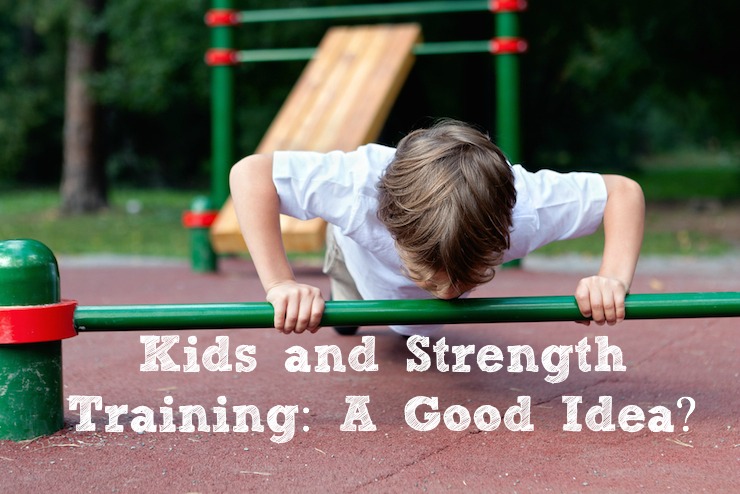
Should children or young athletes do strength training? Does it harm them, or is it actually beneficial? Does strength training stunt growth in youth? Misconceptions about youth strength training have increasingly prompted researchers and other professionals working with children to study the topic in more depth—and there is already sufficient evidence to debunk the common myths[1][2][3]. To raise awareness of the importance and practical applications of youth strength training, this post is intended primarily for any professional responsible for children’s training, health, or overall well-being. Of course, there’s plenty here for young trainees themselves as well.
What is strength training and how do you start? By way of preface: childhood is the period from the end of infancy to the onset of adolescence; girls up to age 11 and boys up to age 13 can be considered children. Although adolescence is harder to define because the pace of sexual maturation varies, girls aged 12–18 and boys aged 14–18 can be considered adolescents. “Youth” is a general term that includes both children and adolescents.
When planning training for young people, including strength training, you should consider the trainee’s baseline physical capacity and health status. Keep in mind that every adolescent’s physical and sexual development is an individual process, so youths of the same chronological age can differ markedly—by as much as 4–5 years—in biological maturity. For example, in team sports or group training the actual load imposed may not be equal for everyone; if a coach is inattentive, a child of the same age but with lower load tolerance can gradually develop an overuse injury. In addition, when planning training you should account for prior training experience; for instance, a technically skilled 10-year-old shouldn’t be limited only to introductory drills.
Because a child’s nervous system develops very rapidly and is highly receptive to change, childhood is the time to develop the main fundamental movement patterns[4]. It’s also important to know that pre-pubertal gains in strength are driven by neural adaptations—nerves learn to recruit muscles more effectively. Although in teenagers strength gains also come from increases in muscle mass and cross-sectional area, the goal of youth strength training should be developing strength and function rather than increasing muscle size.
Regular strength training increases muscular strength[5] and power [1], improves running speed[6] and overall motor performance[7]. From a health perspective, it reduces body fat[8], increases bone density[9] and insulin sensitivity[10], improves cardiac function[11], and even mental well-being[12]. For overweight children, strength training may in fact be a better way than the commonly prescribed aerobic exercise to boost muscular strength, motor coordination, self-confidence, and daily physical activity[13]. However, an 8–12-week break can return a youth’s performance measures to baseline, which is why effective, injury-preventive strength training should be long-term, year-round, deliberately planned, and periodized. In other words, once you start, plan it properly—this prepares youths to tolerate the loads ahead. A sudden spike in training load often leads to overuse injuries[14].
It’s often assumed that strength training is too stressful for young people and harms the developing skeleton. Yet ball sports can impose ground reaction forces of 5–7 times body weight—far greater than typical strength-training loads. From a public-health standpoint, it’s important to dispel this myth: in childhood, strength training is one of the best ways to build bone mass and structure[15]. Fears about damaging growth plates are unfounded—mechanical stress on bone is actually essential for bone formation and increasing bone mass[15][16]. By contrast, insufficient physical loading in childhood can cause long-term bone-health issues[17]. There is also no evidence that strength training in childhood stunts growth[18]. Regular, early strength training helps young ball-sport athletes prepare their bodies for the jumping and landing loads to come. For youth in competitive sport, in-season strength training helps preserve muscle mass—supporting injury prevention[13] and improving performance[4].
Although injuries related to strength training have been described, they occur primarily when training without a coach or under unqualified supervision. Most strength-training injuries are accidents and therefore preventable with adequate supervision, appropriate loading, and a safe environment.
Which exercises should you choose? Any child starting strength training should be able to follow instructions and maintain balance and body positions. Technical execution is the priority in youth strength training. For safety, use age-appropriate equipment—lighter bars, small dumbbells, machines, suspension systems, etc. Resistance can come from body weight, machines, free weights (barbells, dumbbells), resistance bands, and medicine balls. Exercise selection depends largely on the child’s technical and physical abilities, the coach’s level, and the training goal. Once the main body-weight movements (squats, lunges, push-ups, etc.) are mastered, introduce free weights. Because the neural plasticity and coordination sensitivity associated with growth make speed development especially important in childhood and adolescence[19], skilled young athletes should further develop dynamic strength with multi-joint and speed-power movements (Olympic-style lifts and plyometrics).
Setting volume, intensity, rest, and frequency. Dosing volume and intensity is key for strength gains and injury prevention. Using excessive loads (intensity) at the expense of technique can cause injury, while excessive volume can lead to overtraining. Coaches and physiotherapists typically use repetition-maximum (RM) testing to gauge intensity; this is a safe and reliable method for youth as well[20][21]. For beginners, formal RM testing is usually unnecessary—more important is choosing a rep range that ensures movement quality and initial strength gains. Vertical or long-jump tests and grip strength are also suitable for assessing strength[22][23]. Because RM testing warrants its own dedicated article, we won’t go deeper here.
Compared with adults, youths recover more quickly from fatiguing strength work, so ~1-minute rest between sets is typically sufficient; for more intense loads, increase rest to 2–3 minutes. Recent evidence suggests children should train 2–3 nonconsecutive days per week to develop strength. Given the body’s continual growth and development, ensure adequate recovery time. While physical activity should be varied, coaches and parents should monitor total weekly training—there should be variation within the week between harder and easier sessions.
In summary, based on the scientific literature:
Deliberately planned strength training, delivered by qualified coaches, is extremely important for youths’ health, physical capacity, and motor-skill development.
- Parents, youth coaches, and healthcare professionals should recognize the benefits of strength training for young people’s health and physical fitness. Early physical activity that includes strength training strongly influences future activity patterns and health.
- Strength training can reduce sports injuries and should therefore be an essential part of young athletes’ preparatory training cycles. Young athletes should also understand its necessity—it should become a mandatory, serious component within the full training cycle.
- Programming should be based on the youth’s prior training experience, motor-skill development, technical execution, and previous strength measures. Qualified specialists must consider both biological and psychosocial maturity.
- The main emphasis should be on technique and exercise variety. Conscious planning of volume and intensity must ensure training is safe, effective, and enjoyable.
- The most effective strength-training programs last at least 8 weeks. Frequency should be 2–3 nonconsecutive days per week.
- Rest between sets should be ~1 minute; for more intense exercises, 2–3 minutes.
- For beginners, use low volume (1–2 sets per muscle group) and low to moderate intensity (≤60% 1RM).
- For more advanced youths, progress both volume (2–4 sets, 6–12 reps) and intensity (≤80% 1RM).
- As training experience and athletic capacity grow, introduce lower-rep (≤6) / higher-load (˃85% 1RM) work.
- Not all exercises need the same sets and reps. For example, an experienced young lifter might do sets of 3 reps for power development, 3–5-rep barbell squats, and lighter exercises for 6–8 reps.
- Repetition speed depends on the youth’s experience and the training phase (warm-up vs. main set). Speed qualities should be trained to maximize effect and enhance nervous-system function.
We wish you successful training!
Hanno Tikkerbär, physiotherapist
Clinic of Sports Medicine and Rehabilitation
Tartu University Hospital
Rannama Physiotherapy
Mati Arend, physiotherapist
Center for Sports Injury Prevention and Research
University of Tartu
Clinic of Sports Medicine and Rehabilitation
Tartu University Hospital
Referenced article: Lloyd RS, Faigenbaum AD, Stone MH, et al. Position statement on youth resistance training: the 2014 international consensus. Br J Sports Med 2014;48:498–505.
[1] Faigenbaum AD, Kraemer WJ, Blimkie CJ, et al. Youth resistance training: updated position statement paper from the National Strength and Conditioning Association. J Strength Cond Res 2009;23:S60–79.
[2] American Academy of Pediatrics. Strength training by children and adolescents. Pediatrics 2008;121:835–40.
[3] Baker D, Mitchell J, Boyle D, et al. Resistance training for children and youth: a position stand from the Australian Strength and Conditioning Association (ASCA). 2007.
[4] Lloyd RS, Oliver JL. The youth physical development model: a new approach to long-term athletic development. Strength Cond J 2012;34:37–43.
[5] Behringer M, Vom Heede A, Yue Z, et al. Effects of resistance training in children and adolescents: a meta-analysis. Pediatrics 2010;126:1199–210.
[6] Mikkola J, Rusko H, Nummela A, et al. Concurrent endurance and explosive type strength training improves neuromuscular and anaerobic characteristics in young distance runners. Int J Sports Med 2007;28:602–11.
[7] Behringer M, Vom Heede A, Matthews M, et al. Effects of strength training on motor performance skills in children and adolescents: a meta-analysis. Pediatr Exerc Sci 2011;23:186–206.
[8] Benson AC, Torode ME, Fiatarone Singh MA. The effect of high-intensity progressive resistance training on adiposity in children: a randomized controlled trial. Int J Obes 2008a;32:1016–27.
[9] Álvarez-San Emeterio C, Palacios-Gil Antuñano N, López-Sobale AM, et al. Effect of strength training and the practice of alpine skiing on bone mass density, growth, body composition and the strength and power of the legs of adolescent skiers. J Strength Cond Res 2011;25:2879–90.
[10] Shaibi G, Cruz M, Ball G, et al. Effects of resistance training on insulin sensitivity in overweight Latino adolescent males. Med Sci Sports Exerc 2006;38:1208–15.
[11] Naylor LH, Watts K, Sharpe JA, et al. Resistance training and diastolic myocardial tissue velocities in obese children. Med Sci Sports Exerc 2008;40:2027–32.
[12] Yu C, Sung R, Hau K, et al. The effect of diet and strength training on obese children’s physical self concept. J Sports Med Phys Fitness 2008;48:76–82.
[13] Schranz N, Tomkinson G, Olds T. What is the effect of resistance training on the strength, body composition and psychosocial status of overweight and obese children and adolescents? A systematic review and meta-analysis. Sports Med 2013;49:893–907.
[14] Valovich-McLeod TC, Decoster LC, Loud KJ, et al. National Athletic Trainers’ Association position statement: prevention of pediatric overuse injuries. J Athl Train 2011;46:206–20.
[15] Hind K, Burrows M. Weight-bearing exercise and bone mineral accrual in children and adolescents: a review of controlled trials. Bone 2007;40:14–27.
[16] Falk B, Eliakim A. Resistance training, skeletal muscle and growth. Paediatr Endocrinol Rev 2003;1:120–7.
[17] Janz KF, Letuchy EM, Eichenberger Gilmore JM, et al. Early physical activity provides sustained bone health benefits later in childhood. Med Sci Sports Exerc 2010;42:1072–8.
[18] Malina R. Weight training in youth—growth, maturation, and safety: an evidence-based review. Clin J Sports Med 2006;16:478–87.
[19] Casey BJ, Tottenham N, Liston C, et al. Imaging the developing brain: what have we learned about cognitive development? Trends Cogn Sci 2005;9:104–10.
[20] Faigenbaum AD, Milliken LA, Westcott WL. Maximal strength testing in healthy children. J Strength Cond Res 2003;17:162–6.
[21] Faigenbaum AD, McFarland JE, Herman RE, et al. Reliability of the one-repetition-maximum power clean test in adolescent athletes. J Strength Cond Res 2012;26:432–7.
[22] Milliken LA, Faigenbaum AD, LaRousa Loud R. Correlates of upper and lower body muscular strength in children. J Strength Cond Res 2008;22:1339–46.
[23] Castro-Piñero J, Ortega FB, Artero EG, et al. Assessing muscular strength in youth: usefulness of standing long jump as a general index of muscular fitness. J Strength Cond Res 2010;24:1810–17.